
The Impact of Wisdom Teeth
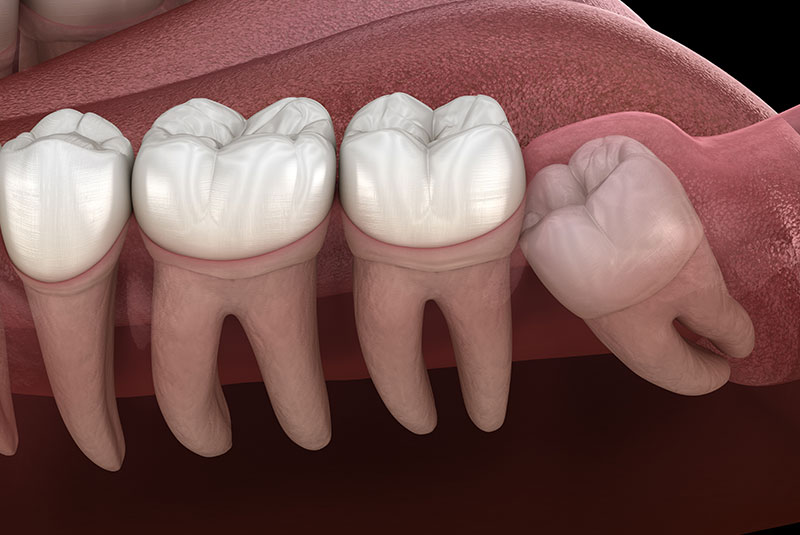
Most adults typically have two complete sets of molars in place by the age of 12, but between 16-20 years old, a third set, known as wisdom teeth, emerges. While ideally, these teeth would integrate smoothly into the dental arch, they often cause problems due to insufficient space. Wisdom teeth commonly become impacted, leading to issues like crowding, shifting, and potential damage to adjacent teeth, nerves, or roots.
These molars can also pose risks of cysts or infections, jeopardizing overall oral health. Even without immediate issues, early detection during their development allows for proactive removal, preventing potential complications. We can safeguard your oral health and prevent future dental problems by addressing wisdom teeth early.
Warning Signs of Wisdom Tooth Problems
- Swollen, red gums around back molars
- Persistent tooth pain in the molars
- Bad breath or unpleasant taste in the mouth
- Stiffness and pain in the jaw
- Persistent, frequent, or unexplained earache or headache
- Blood or pus near your molars
- Swollen jaw or cheeks
- Difficulty biting, chewing, or opening and closing normally
The Process
Your Guide To Wisdom
Your Guide To Wisdom
Tooth Removal
We understand that wisdom tooth removal may be the first experience with oral surgery for many of our patients. This routine procedure is focused on your comfort and clarity — here's a general overview of what you can anticipate from our process.
Step One
Consultation
In your consultation with our team, we will thoroughly examine your mouth, complemented by digital X-rays. This assessment will help us determine the position and complexity of your wisdom tooth extraction so we can plan your procedure with precision and care.
Step Two
The Extraction
To access the tooth, we'll create an incision in the gum tissue, and if necessary, eliminate some surrounding bone or divide the tooth into smaller pieces in order to retain the integrity of the bone. The procedure is conducted with precision and care. We often remove all four wisdom teeth in a single session to streamline your healing process, and in some instances may employ a sectioning technique for better control.
Step Three
Recovery
Since there will be swelling, we will provide you with an ice pack to help. Our team will thoroughly discuss post-operative instructions, guiding you to tend to the extraction site and promote healing